
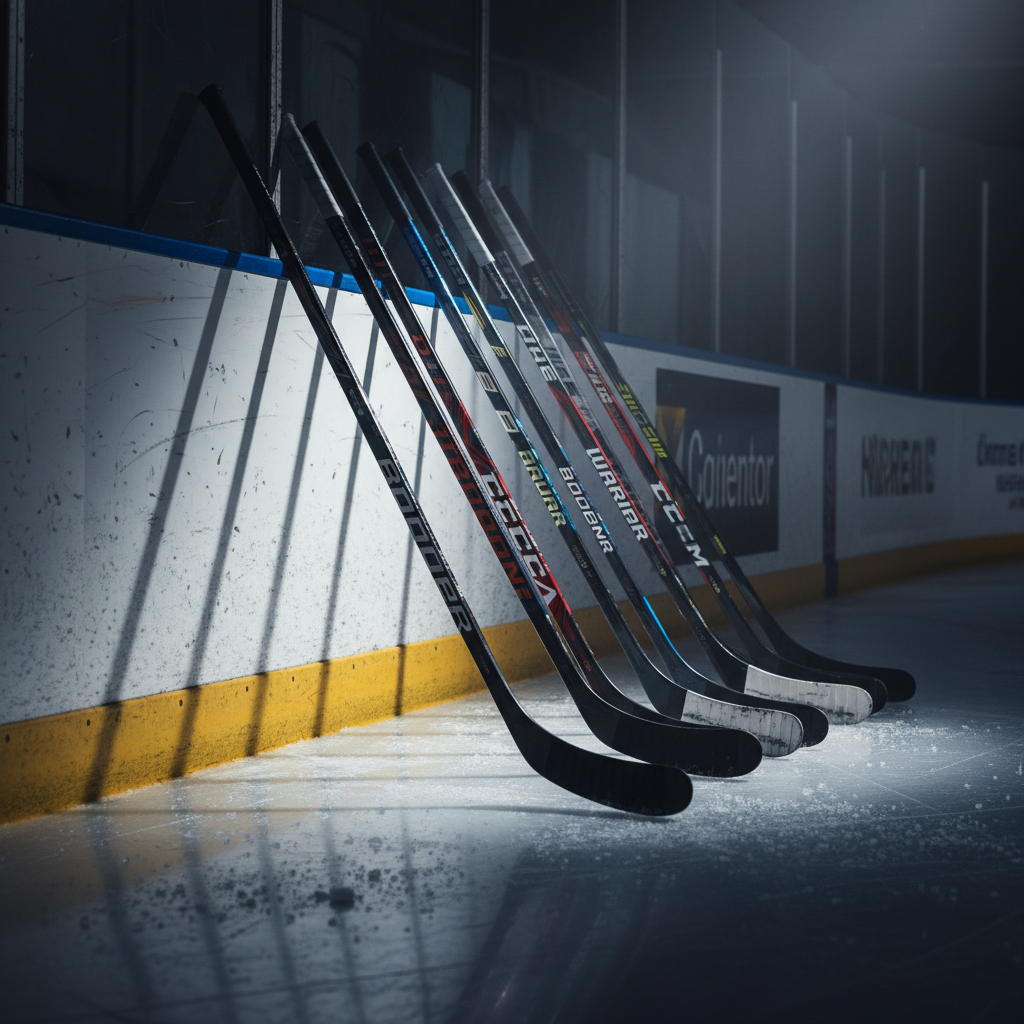
Why Choosing the Right Hockey Stick Matters
A great hockey stick can make or break your game. Whether you are a beginner just lacing up for the first time or a seasoned player looking to upgrade your gear, finding the right stick is essential for performance, accuracy, and comfort on the ice.
What to Look For in a Hockey Stick
- Flex: Lower flex (55-75) is better for beginners; stiffer flex for harder shots
- Blade curve: Mid-curves are most versatile for new players
- Material: Composite sticks are lighter; wood sticks are cheaper and more durable for beginners
- Length: When standing in skates, the stick should reach your chin
- Lie: A lie of 5 or 6 works for most players
Top Hockey Sticks for Beginners in 2026
1. Bauer Nexus E3 Intermediate Stick
The Bauer Nexus E3 is widely regarded as one of the best beginner sticks on the market. Its mid-kick point makes passing and shooting intuitive, and the blade curve is forgiving enough for players still developing their mechanics. The two-piece construction is durable enough to survive the learning curve.
2. CCM Jetspeed FT460
CCM’s Jetspeed line has always been popular for its lightweight feel and quick release. The FT460 brings that technology down to a more accessible price point, making it an excellent choice for intermediate players ready to step up from a basic wood stick. The carbon fiber construction keeps it light without sacrificing pop.
3. Warrior Covert QR5 30
Warrior sticks are known for their aggressive blade curves and quick-release points. The QR5 30 is built for players who want to develop their shooting mechanics early. The low kick point makes wrist shots feel natural, and the grip finish helps with stick handling on loose pucks.
4. True AX5 Intermediate
True Hockey has built a loyal following by prioritizing feel and balance. The AX5 is a fantastic intermediate option that gives you a taste of pro-level construction without the pro-level price. Its AXENTZ fiber construction offers great energy transfer on every shot.
5. Easton Synergy EQ50
A classic choice that has stood the test of time. The Easton Synergy EQ50 is an affordable composite stick that delivers consistent performance for recreational and beginner players. It is widely available and easy to find replacement blades for if you play a high-volume schedule.
Wood vs Composite Sticks: Which Should You Buy?
This is one of the most common questions new players ask. The honest answer depends on your budget and how serious you are. Wood sticks are significantly cheaper — often under $30 — and are nearly indestructible. They are great for learning the basics. However, they are also heavier and have less feel.
Composite sticks are lighter, offer better puck feel, and allow for quicker shot release. If you are playing regularly and want to develop real skills, a composite stick in the $80-$150 range is worth the investment. Most beginner composites will last a full season of recreational play.
How to Size a Hockey Stick Correctly
Sizing a stick is easy but critical. Stand in your skates (or add about an inch if you are measuring in shoes) and hold the stick straight up. The top of the stick should reach somewhere between your chin and your nose. Defensemen often prefer longer sticks for reach; forwards tend to go shorter for better puck control in tight spaces.
For junior players, always measure with skates on if possible — the heel lift in skates changes the effective length significantly.
Stick Maintenance Tips to Extend the Life of Your Gear
Even the best stick will wear out faster if you do not take care of it. A few simple habits will extend the life of any stick:
- Apply fresh blade tape before every game — worn tape reduces puck feel and lets moisture in
- Use stick wax on the blade tape to repel ice and water
- Store your stick horizontally, not leaning against a wall — this prevents warping
- Avoid leaving composite sticks in extreme heat (like a hot car) which can weaken the carbon fiber
Budget Guide: What to Spend at Each Level
Not sure how much to invest? Here is a simple breakdown:
- Casual/first-timer: $25-$50 wood stick, no shame in starting here
- Regular recreational player: $80-$120 entry composite
- Competitive recreational/adult league: $130-$200 mid-range composite
- Serious competitive player: $200-$350 high-end composite
Stay Safe When Streaming Hockey Online
As a hockey fan and player, you probably stream games, watch tutorials, and shop for gear online constantly. One tool serious hockey fans use is NordVPN — a VPN that encrypts your connection, lets you access NHL streaming from anywhere, and keeps your payment info safe when buying gear online. With 40% off for new subscribers, it is worth adding to your setup. Get NordVPN’s latest deal here →.
Final Verdict
For most beginners, the Bauer Nexus E3 or CCM Jetspeed FT460 represent the best value. They are affordable, durable, and teach good habits. As you improve, upgrading to a higher-flex composite with a more aggressive curve will feel like a natural progression. Do not overthink it — the best stick is the one that gets you on the ice.
Disclosure: This post contains affiliate links. We may earn a commission if you purchase through our links, at no extra cost to you.