
Good hockey equipment should protect you without fighting your stride, shot or reach. The best place to start is not a brand or a price tag, but the fit: gear needs to stay in position, cover the areas it is designed to protect, and let you move naturally. This guide walks through the main pieces of protective equipment and a simple way to compare options.
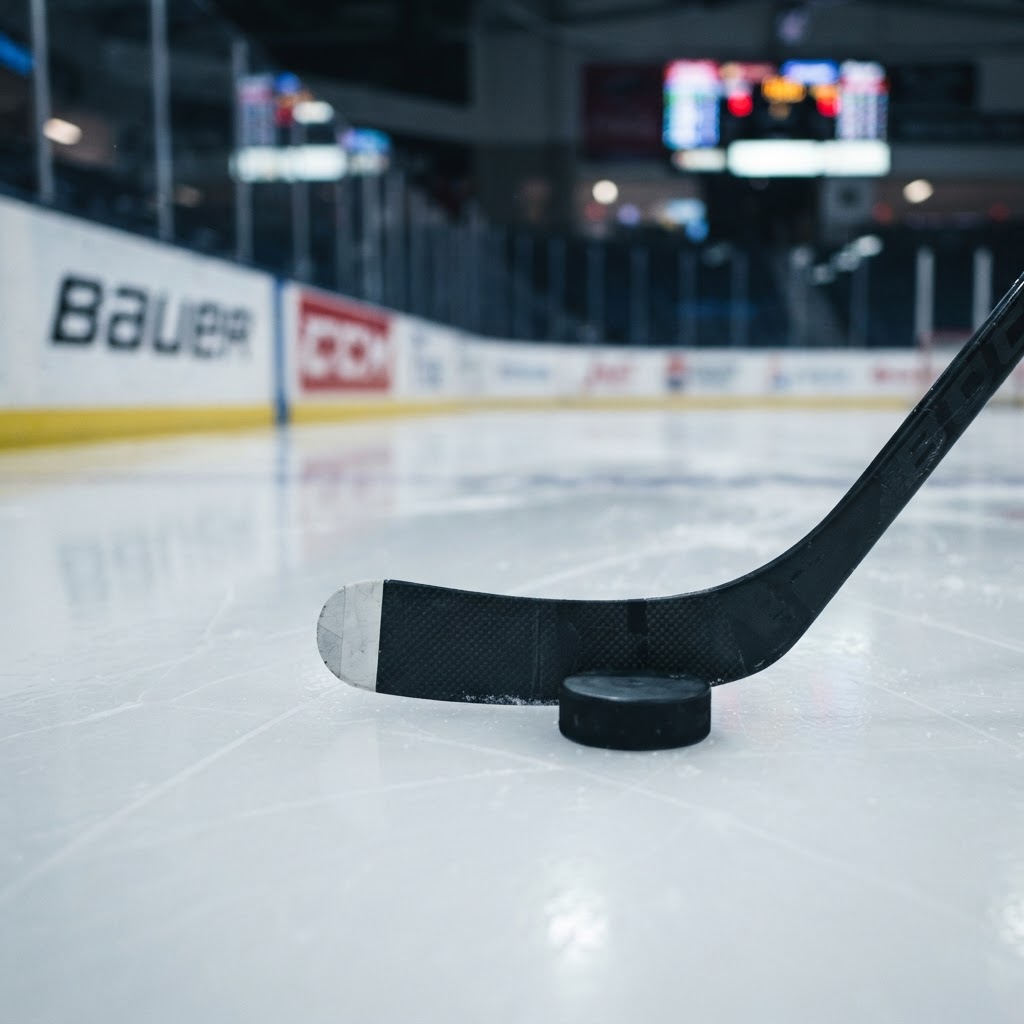
Start with your level of play and league rules
Before shopping, check your league or rink requirements. Rules may specify approved helmets, face protection or other safety equipment. Recreational players should also consider how often they play, the intensity of contact and whether the gear is comfortable enough to wear consistently. A beginner does not need every premium feature, but should not compromise on a secure fit or required protection.
Helmet and face protection: secure, level and comfortable
A helmet should sit level and feel snug without painful pressure points. It should not slide around when you move your head. Follow the manufacturer’s sizing and adjustment instructions, and pair it with face protection that meets your league’s requirements. Inspect straps, clips, padding and the shell regularly, and replace damaged equipment according to the manufacturer’s guidance.
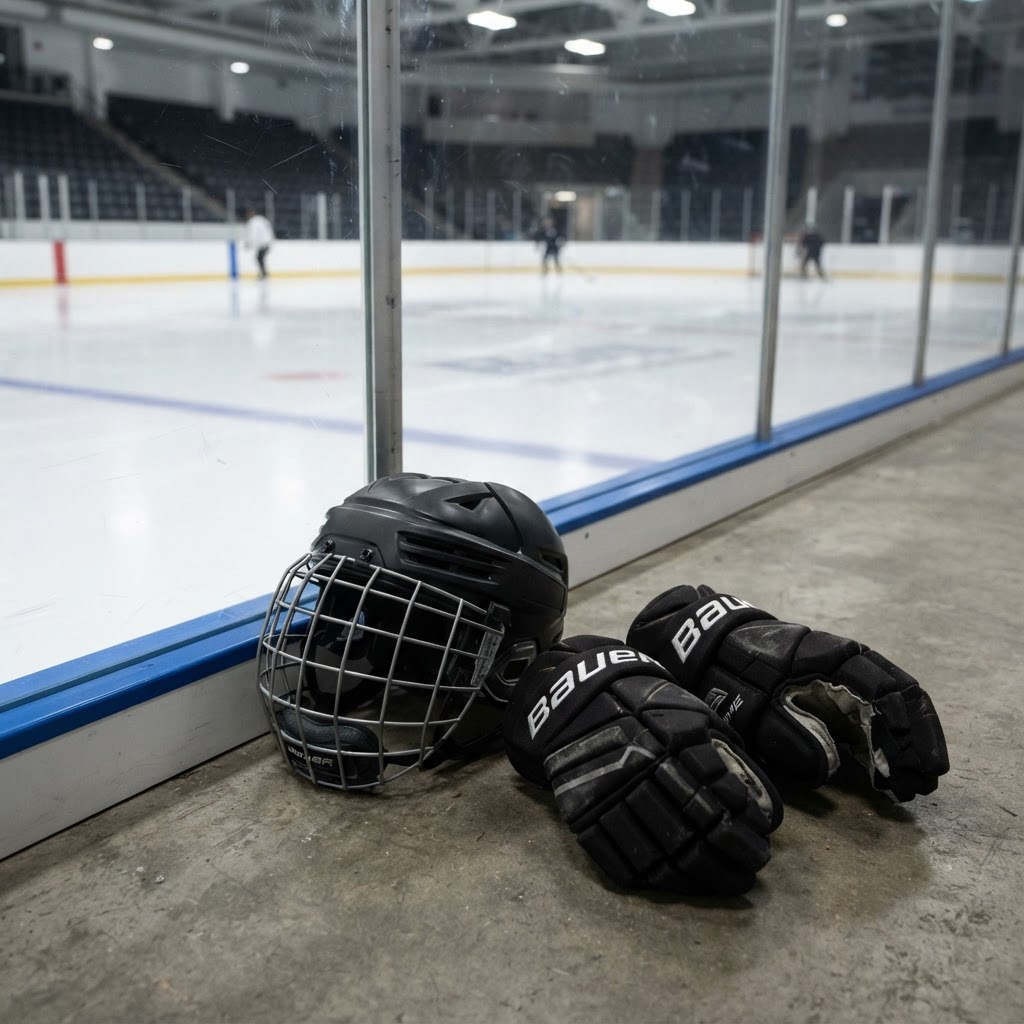
Compare hockey helmets with cages on Amazon by fit system, certification information and compatibility with your face protection, rather than appearance alone.
Shoulder and elbow pads: coverage that moves with you
Shoulder pads should cover the chest, shoulders and upper back as intended, while allowing your arms to reach forward and overhead. Elbow pads should stay centered over the elbow when you bend and extend your arm. Try both pieces together: overlapping edges should not leave a gap, and the combination should not pinch when you assume a skating stance or hold a stick.
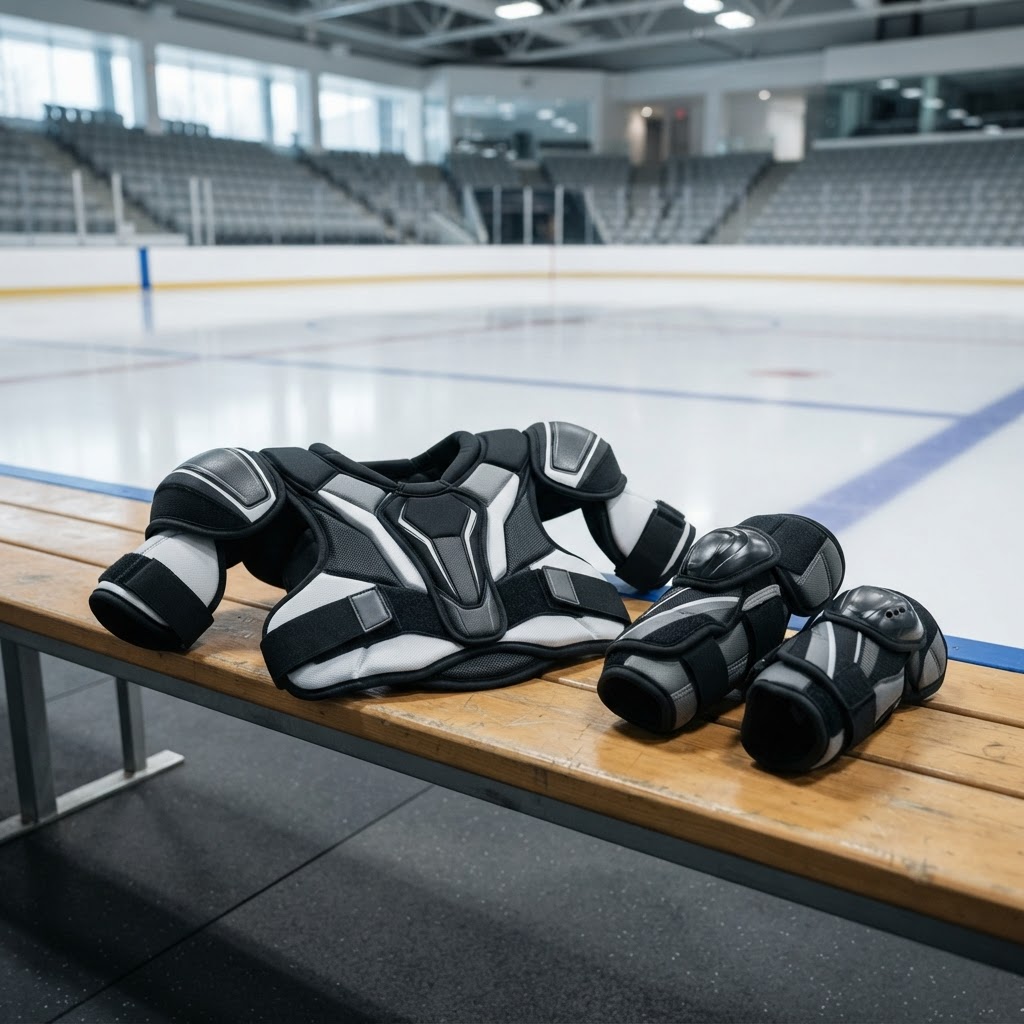
Browse hockey shoulder pads and hockey elbow pads, then compare sizing charts and return policies before ordering.
Gloves: check grip, finger movement and cuff overlap
Hockey gloves should allow your fingers to close around the stick without excess material bunching in the palm. Check that the cuff works with your elbow pads and that you can move your wrists comfortably. If possible, hold a stick while trying them on: a glove that feels fine with your hand open may feel restrictive on the shaft.
See ice hockey gloves on Amazon and compare palm feel, cuff length and available sizes.
Shin guards, socks and skates: test the full lower-body setup
Shin guards should remain in place as you bend your knees, with coverage appropriate to your fit and playing style. Try them with the hockey socks and pants you use on the ice, since the layers affect comfort and overlap. Skates should feel secure around the heel and ankle without numbness or sharp pain. Use the manufacturer’s sizing guidance and ask a knowledgeable skate fitter when unsure; skate sizing does not always match everyday shoe sizing.
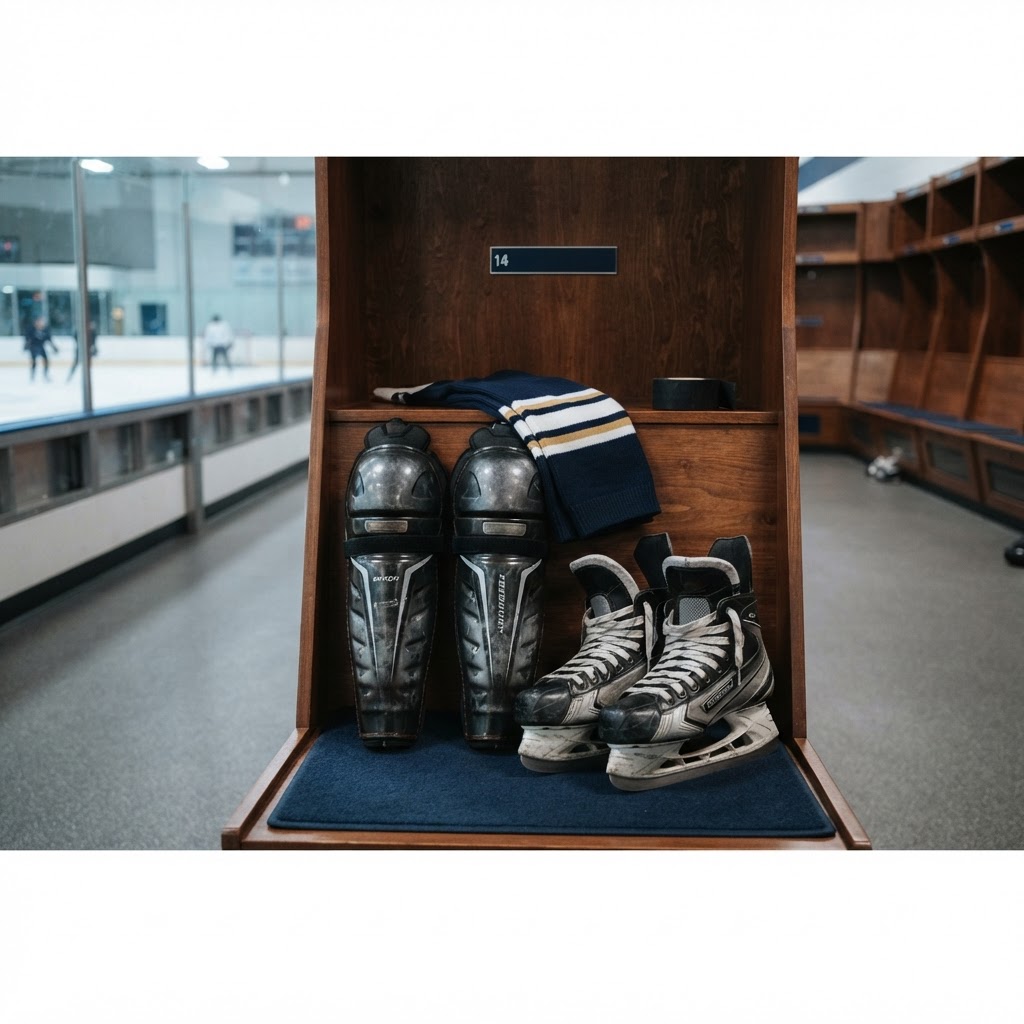
Compare hockey shin guards and ice hockey skates by fit, adjustability and the return or exchange terms.
A quick try-on checklist
- Use the brand’s sizing chart and measure as directed.
- Try the complete setup, including base layers, socks and pants.
- Bend your knees, rotate your shoulders, reach forward and hold a stick.
- Check that pads stay centered and protective pieces overlap as intended.
- Stop if you feel numbness, sharp pain or restricted breathing or movement.
- Inspect used gear carefully for damage, worn straps, cracked shells or missing parts.
- Check league requirements and manufacturer care and replacement guidance.
Where to spend and where to keep it simple
Prioritize proper fit, required protection and durable construction. Extra features can improve comfort or adjustability, but they do not make a poorly fitting item safe. If budget is limited, compare reputable new options and inspected used equipment, and do not use damaged protective gear. For children, recheck fit as they grow rather than assuming last season’s equipment still fits.
Bottom line
Choose hockey equipment as a complete system. Confirm the rules, use sizing guidance, try pieces together and move in the positions you use on the ice. A comfortable, secure fit is more useful than a long feature list, and routine inspection helps you catch wear before the next game.
Affiliate disclosure: This post contains Amazon affiliate links. As an Amazon Associate, we may earn from qualifying purchases at no additional cost to you.
Leave a Reply