Buying hockey gear is less about chasing the newest model and more about getting the right fit, protection, and comfort for how you play. This 2026 guide walks through the decisions that matter most, from helmet certification to skate fit, and gives you a practical checklist before you spend.
Start with fit, not the price tag
Equipment should stay in place when you move, without pinching or restricting your range of motion. Try gear on with the base layers and socks you actually wear. Check that pads overlap as intended when you bend your knees, crouch, and reach forward. If you play in a league, confirm its equipment rules before buying.
Helmet and face protection
Choose a helmet with the required current safety certification for your league and a secure, level fit. It should not rock when you move your head. Adjust the cage or shield so it sits correctly, and replace damaged components instead of improvising repairs. A helmet is protective equipment, not a guarantee against injury. Browse hockey helmets and cages on Amazon.
Shoulder pads, elbow pads, and gloves
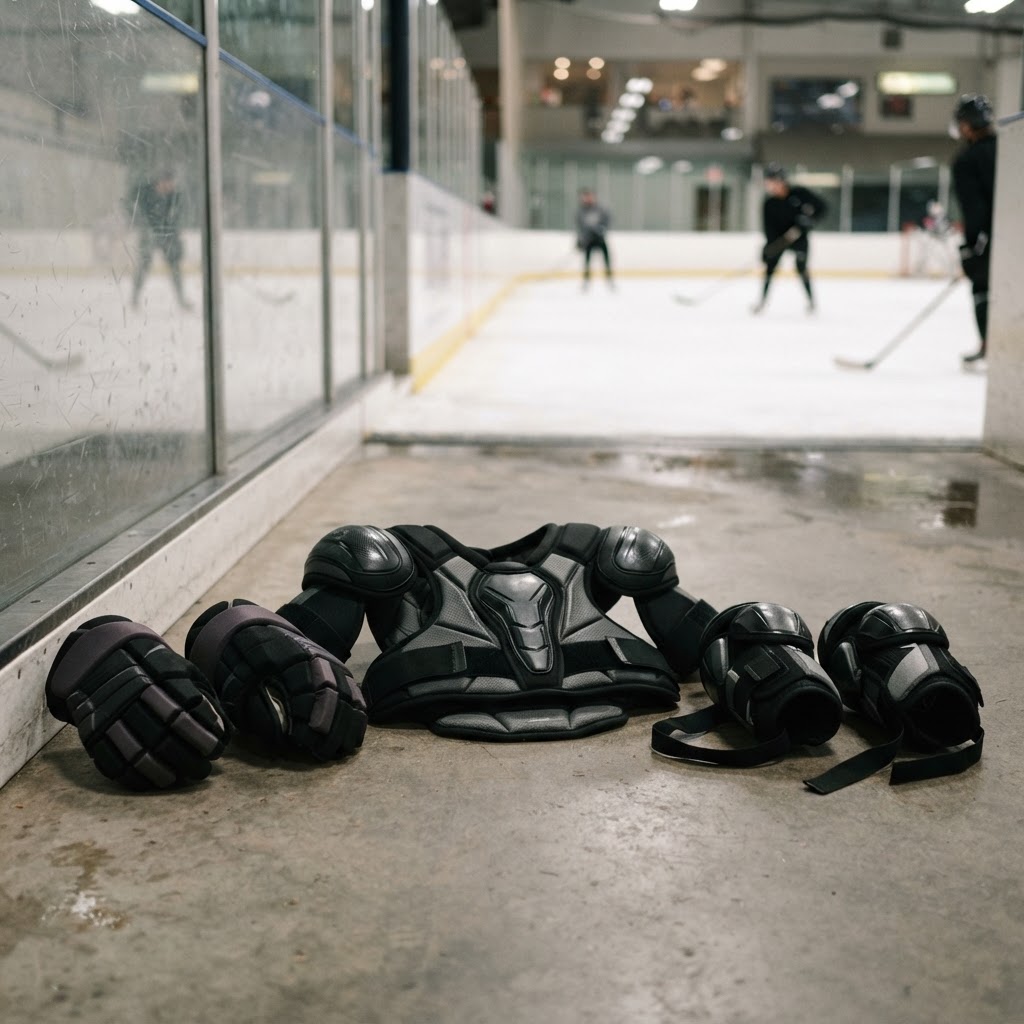
Shoulder pads should cover the chest and shoulders without lifting into the helmet or limiting your stride. Elbow pads need to remain centered while your arms flex. Gloves should protect the fingers and cuff while letting you grip and handle the stick naturally. Look for secure straps, comfortable liners, and seams that do not rub. Compare shoulder pads, elbow pads, and hockey gloves.
Shin guards and pants
Shin guards should cover the knee and shin with no large gaps when you are in a skating stance. Check how the knee cap sits and whether the guard stays in place under your socks. Hockey pants should overlap the top of the shin guards and protect the hips and thighs without getting in the way. Shop hockey shin guards.
Skates: comfort and control
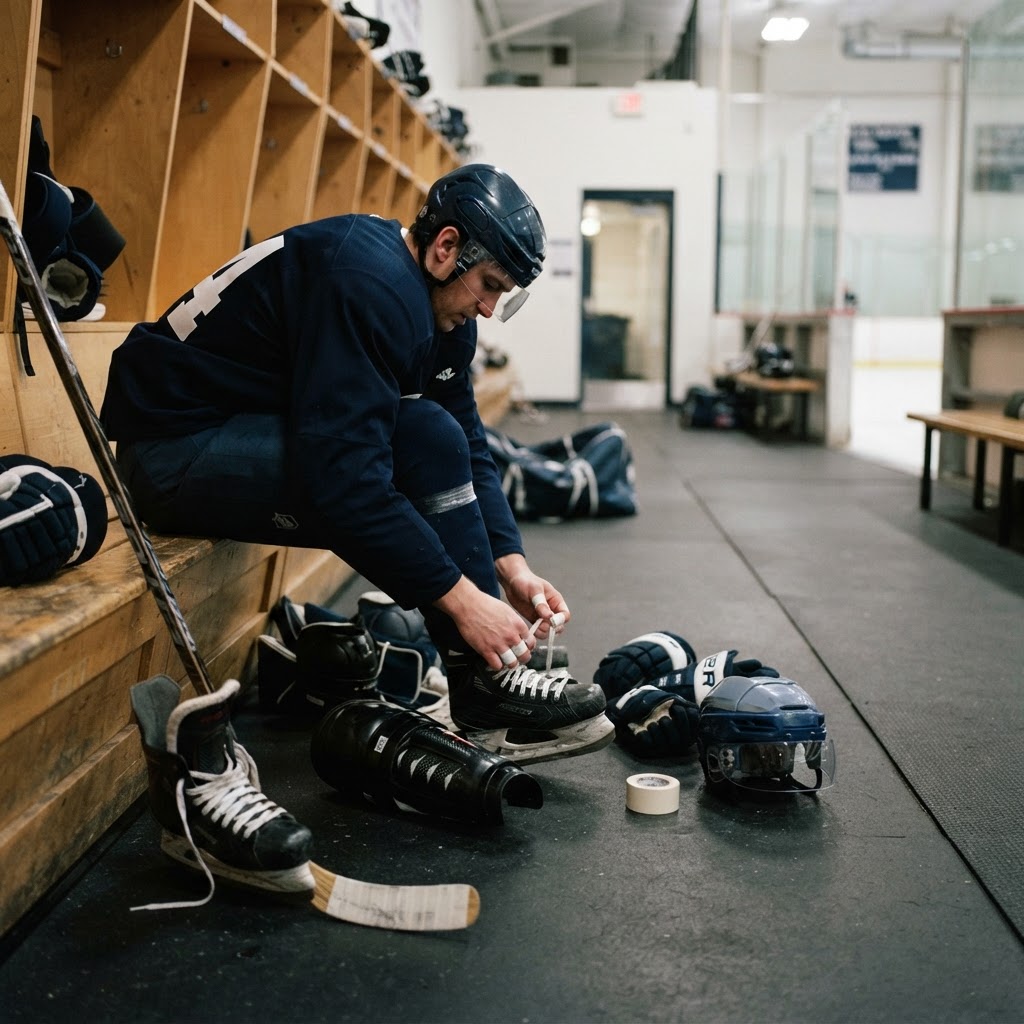
Skates should hold the heel securely and feel snug, but painful pressure or numbness is a sign to reassess fit. Skate sizing differs from street shoes, so use a proper fitting and follow the manufacturer’s baking instructions only when applicable. Check blade condition and have sharpening done by someone who understands your preferred hollow and level of play. Explore ice hockey skates.
Stick selection: flex, curve, and length
Stick flex affects how easily the shaft loads; the right choice depends on your strength, shot style, and preference. Blade curves influence puck handling and shooting feel. Start with a length that lets you maintain control in your normal stance, and avoid cutting a stick until you are sure. Youth players may benefit from lighter, appropriately sized gear rather than simply using adult equipment.
A quick pre-season checklist
- Confirm certification, league rules, and that all equipment is undamaged.
- Try the full set on together and test a skating stance and stickhandling motion.
- Check pad overlap, strap security, skate comfort, and helmet stability.
- Prioritize correct sizing and replacement of worn protective gear.
- Compare return policies and ask a qualified fitter when sizing is uncertain.
The best setup is the one that fits your body, your level of play, and your league requirements. Take time to test each piece before game day.
Disclosure: As an Amazon Associate, we earn from qualifying purchases.
Leave a Reply