If there’s one piece of equipment that decides whether you love hockey or merely tolerate it, it’s your skates. A bad pair turns every shift into a battle with your own feet. A good pair disappears — and suddenly you’re thinking about the play, not the blisters. This guide walks beginners and intermediate players through everything that actually matters when buying ice hockey skates in 2026, from fit and bake-ability to steel and budget.
The One Rule That Beats Everything: Fit
Hockey skates do not fit like shoes. They run one to one-and-a-half sizes smaller than your street shoes, and they should feel snug — your toes should just feather the toe cap when you’re standing upright, then pull slightly away when you bend your knees into a skating stance. If a skate is “comfortable” standing straight, it’s too big.
When you try skates on, wear the socks you’ll actually skate in (thin, synthetic — not cotton). Lace them fully, then do a knee bend. Heel locked in place? Toes lightly brushing? That’s the fit you want. A loose heel causes blisters, lace bite, and wasted stride power.
Skate Fit Technology: Heat Molding and Customization
Most mid-range and premium skates in 2026 are heat-moldable (“bakeable”). A shop heats the boot in a special oven, you lace it on warm, and the foam liners conform to the exact shape of your foot — taking a break-in period from weeks down to days.
Beginners: yes, this matters even at entry-level price points. If your budget lands near the $200 range, prioritize a skate with a moldable quarter package. It’s the single biggest comfort upgrade per dollar in the entire sport.
Beginner Skates: What to Look For
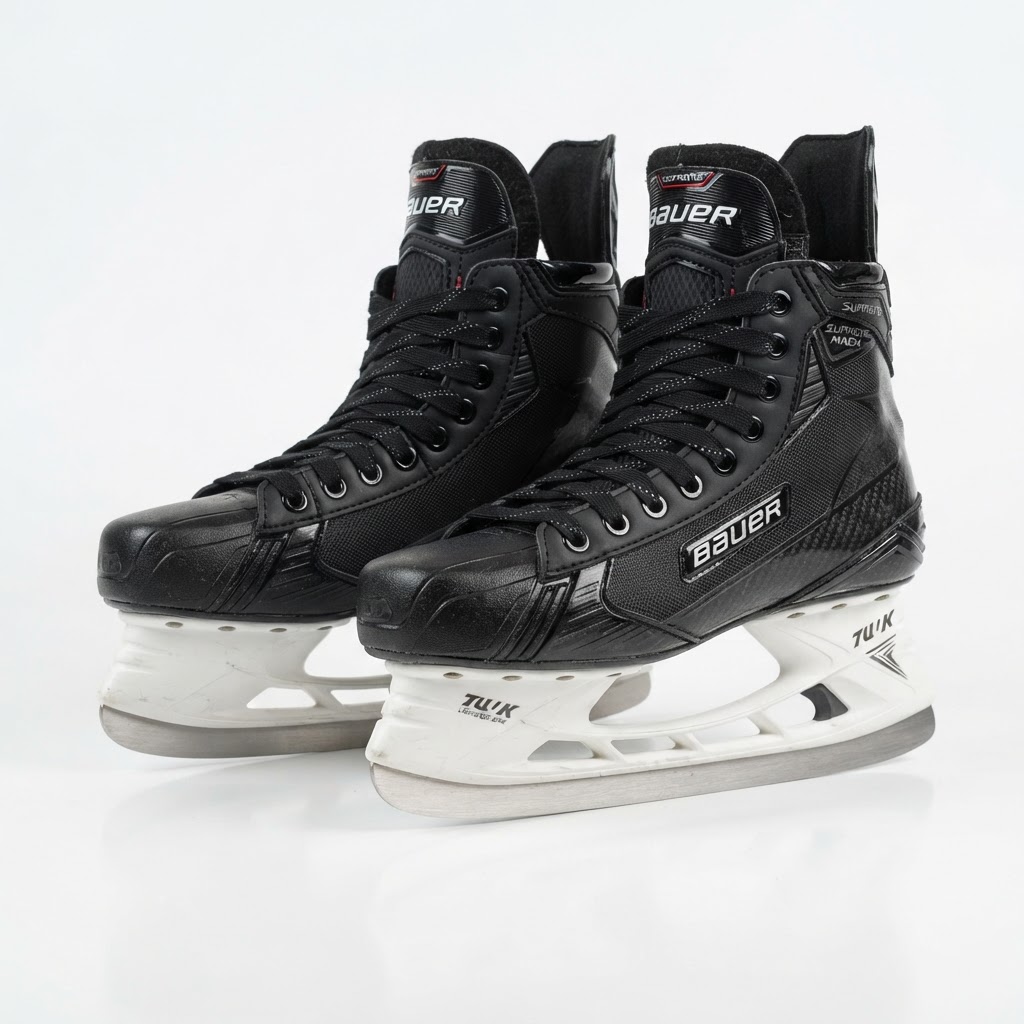
New players need three things from a skate: ankle support that forgives imperfect technique, enough padding to survive long public-skate sessions, and a price that doesn’t hurt when you’re still deciding whether hockey is your sport.
Good beginner skates have a softer boot flex that’s more comfortable out of the box and easier to stride in while your ankles are still building strength. Don’t be tempted to buy a stiff pro-level skate “to grow into” — an overly stiff boot fights a beginner’s stride instead of helping it.
A reliable entry-level option that consistently earns strong reviews from new players is the Bauer entry-level ice skate line, which offers real ankle support and a decent out-of-box fit without the premium price tag.
Intermediate Skates: Where Your Money Goes
Once you’re skating two or three times a week, intermediate skates ($300–500) pay you back in three ways: a stiffer boot that transfers more of each push into the ice, lighter overall weight (often 100+ grams lighter per skate), and better steel holders with higher-quality runners that hold an edge longer.
The sweet spot in this tier is the CCM mid-range skate family — a stiff composite boot with a replaceable blade system, which means you can swap steel in seconds instead of unscrewing holders in a pro shop.
Steel, Blades, and Sharpening
Your blade is the only part of the skate that actually touches the ice, and it deserves respect. Two things to know:
- Hollow radius: The hollow is the groove ground down the middle of the blade. Lighter players usually prefer a deeper hollow (more grip); heavier players go shallower (more glide). Start at the shop default (usually 1/2″) and adjust from there.
- Sharpening cadence: Recreational skaters typically need a sharpen every 8–15 hours of ice time. A dull blade is the #1 cause of “my skates feel weird” complaints.
Keep a portable sharpening stone or edge touch-up tool in your bag — between full sharpenings, a few passes on each edge restores bite and saves money over a season.
Protecting Your Investment
Skates are the most expensive thing most players carry, and they die from the inside out: moisture rots the foams and rusts the rivets. Three cheap habits double a skate’s lifespan:
- Dry them out. Pull the footbeds after every skate and air the boots at room temperature. Never on a radiator.
- Use soaker guards. Walking on bare blades across parking lots and locker room floors destroys edges instantly. Keep a set of absorbent soaker guards on the blades inside the bag — they soak up melt water and protect the steel at the same time.
- Wear skate guards outside. Hard rubber skate guards are for walking to and from the rink; soakers are for storage. You need both.
Budgeting Realistically
Here’s an honest breakdown for 2026:
- Total beginner (public skating + first lessons): $100–200. Fit matters more than features.
- Committed beginner (league play): $200–350. Bakeable boot, decent holder system.
- Intermediate (2–3x per week): $350–550. Stiff composite boot, replaceable steel.
- Don’t forget the extras: sharpenings ($8–15 each), soakers and guards ($25–40), and a skate bag that lets the boots breathe.
Skates are the last place to save money and the first place to spend it. A great-fitting intermediate skate will outlast two cheap pairs and improve your skating every single time you step on the ice.
Final Word
Buy for today’s skill level with a little headroom, prioritize fit above every spec sheet, bake whatever you buy, and maintain the steel. Do those four things and your skates stop being equipment and start being an advantage. See you at the rink.
Recommended on Amazon
- Bauer beginner ice hockey skates
- CCM intermediate hockey skates
- Skate sharpening stone & edge tool
- Skate soaker guards
- Hard rubber skate guards
Disclosure: As an Amazon Associate, BigCarl’s Hockey earns from qualifying purchases made through the links on this page at no extra cost to you.
Leave a Reply